

US Taxes and Social Security
A Guide for J1 Participants
A quick guide to taxes and Social Security
If you have a paid position in the USA, you will likely get paid weekly or every other week, either by check or direct deposit into your bank account.
Your host organization will provide a statement showing the number of hours of training, pay, and the taxes and other deductions taken out of your paycheck.
If you are a CIEE participant currently in the USA or have recently returned and have any questions regarding tax status or tax witholding, please contact CIEE directly
Also on this page: Applying for a Social Security Number/ Tax Returns
Is your J1 Intern or J1 Trainee position Unpaid?
We strongly suggest applying for your Social Security number even if your position is unpaid. This will make opening a bank account easier, and may make any future employment or programmes in the USA easier!
Unpaid participants and all J-2 dependents must also file tax forms. If your position is unpaid, there is no tax due. However, participants and all J-2 dependents must still file tax Form 8843. Visit irs.gov for details
How taxes in the US work for J1 visa participants
What you must pay:
Federal Income Tax
State Income Tax (if applicable)
Local or City Income Tax (if applicable)
What you do not have to pay
Social Security and Medicare (FICA)
Federal Unemployment Tax (FUTA)
Filing Tax Returns
At the end of the year, you will be required to file a tax return – which is due April 15, unless the 15th falls on a holiday or weekend, in which case your tax return will be due a day or two later. The good news? You may be eligible to claim a refund for a portion of the taxes you have paid. Failure to file a return and/or pay taxes may prohibit you from returning to the U.S. in the future.
Tax Guide for J-1 Visa Participants: Form 8843 & 1040-NR Explained
Every J-1 visa participant in the US during 2025 must file tax paperwork, regardless of whether they earned money. If you earned no US income, you only need to file Form 8843 by June 15, 2026. If you did earn US income (wages, stipends), you must file both Form 8843 and a Form 1040-NR tax return by April 15, 2026.
There are services available to help you with this, such as Sprintax - but please note they do charge for their services.
NOTE: IST Plus are not licensed tax experts and therefore cannot provide tax advisory services. The information provided here is merely a reminder to participants about basic information needed to file taxes and other resources available to them.
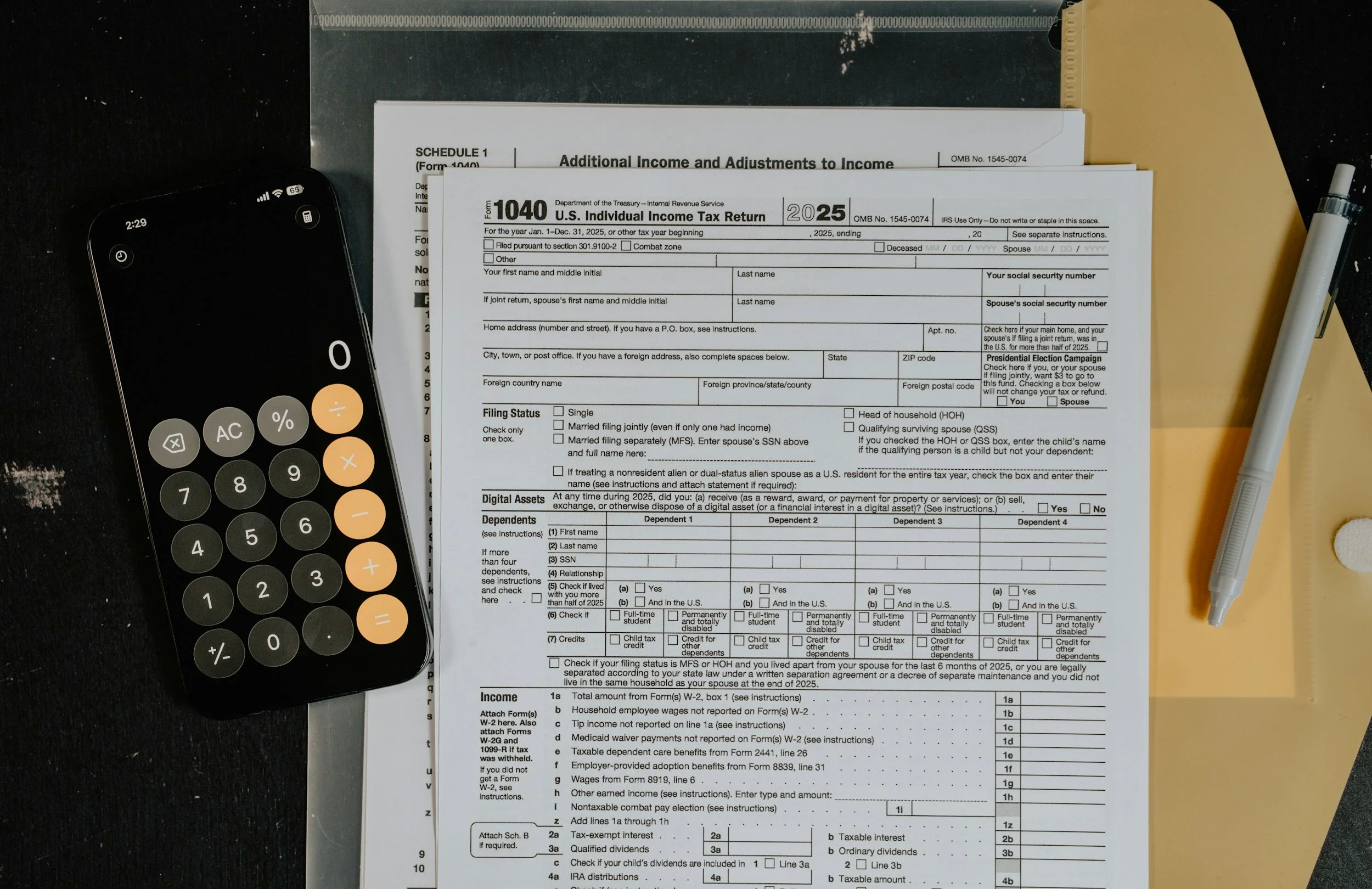
What If My J-1 Internship or Traineeship is Unpaid?
It is a common misconception that if you didn't get paid, you don't have to file anything with the IRS. This is simply not true! If you completed an unpaid internship or traineeship on a J-1 visa in 2025, you still have a legal obligation to the US government.
Your Only Form is Form 8843: Because you did not generate any US-sourced income, you do not need to file a tax return (Form 1040-NR). You only need to file the informational Form 8843.
Watch out for "Hidden" Income: Did your host company provide a housing stipend, a living allowance, or reimburse your travel expenses? Depending on how the company classified these perks, they might be considered taxable income by the IRS. If your host company issues you a 1042-S Form early in the year for these benefits, you will need to file Form 1040-NR along with your Form 8843. If they don't issue you any tax forms, you stick to just Form 8843.
1. Who Needs to File a J-1 Visa Tax Return?
The golden rule of being an international visitor in the US on an F, J, M, or Q visa is that every single participant has a tax filing obligation.
As a J-1 visa holder, the IRS generally classifies you as a "Nonresident Alien" for tax purposes. Your specific paperwork depends on your income:
2. How to Complete Form 8843 (Mandatory for All J-1s)
Despite its name, Form 8843 (Statement for Exempt Individuals and Individuals With a Medical Condition) is not a tax return. It is an informational statement. Filing this form proves to the IRS that your days in the US should not count toward the Substantial Presence Test, protecting you from being taxed like a US citizen.
Form 8843 Step-by-Step Instructions:
Personal Information: Enter your name exactly as it appears on your passport. If you have a Social Security Number (SSN), enter it. If not, leave it blank. Provide both your home country address and your US address.
Part I (General Information): * Line 1a & 1b: Enter "J-1" and your exact date of US entry.
Line 4a & 4b: Calculate the exact number of days you were physically in the US in 2025 and prior years. (Check your I-94 travel history online if you are unsure).
Part II (Teachers & Trainees) OR Part III (Students): * J-1 Teachers, Researchers, or Trainees fill out Part II.
J-1 Students and Work & Travel participants fill out Part III.
Pro Tip: You will need the name, address, and phone number of your program sponsor. You can find this on your DS-2019 form.
Parts IV and V: Leave these blank unless you had a specific medical condition preventing your departure.
Sign and Date: Sign the bottom of page 2 in ink.
Filing Form 1040-NR for J-1 Income Earners
If you received US wages or a stipend in 2025, you must file a federal tax return using Form 1040-NR (U.S. Nonresident Alien Income Tax Return).
Documents Needed to File:
W-2 Form or 1042-S Form: Provided by your US host company in early 2026 showing your earnings and taxes withheld.
DS-2019 Form
Valid Passport & Visa
Social Security Number (SSN)
Warning: If you are using a tax filing service, you should use specialised software like Sprintax . Do not use standard US software like TurboTax or H&R Block, as they will incorrectly file you as a US resident, which violates your visa terms!
What to Do When Your W-2 Arrives
Once you receive your W-2 Form from your employer, it is time to officially file your tax return. Here is a breakdown of the process:
File Form 1040-NR: This is the U.S. Nonresident Alien Income Tax Return. You will use the information on your W-2 to fill this out.
Include Schedule OI: This is a mandatory accompanying document (which stands for "Other Information") that must be submitted alongside your 1040-NR.
Follow the Instructions Carefully: The IRS provides a specific instruction pamphlet for Form 1040-NR. You may also need to reference the standard Form 1040 instructions for line-by-line details, but always defer to the 1040-NR guide for exceptions that apply to non-residents.
CRITICAL WARNING: Make absolutely sure you are using Form 1040-NR. Do not use the standard Form 1040, as that is strictly for U.S. citizens and residents. Filing the wrong form can violate your visa status!
The Final Result: A Refund or a Bill? After calculating your taxes on these forms, you will get one of two results. If your employer withheld too much tax from your paychecks, the U.S. government will issue you a refund. However, if not enough tax was withheld during your program, you will be required to pay the remaining balance to the IRS.
2025 J-1 Tax Deadlines and Mailing Addresses
Filing Form 1040-NR + Form 8843 (Paid Interns/Income Earners): Deadline is April 15, 2026.
Filing Form 8843 Only (Unpaid Interns/No Income): Deadline is June 15, 2026.
Where to Mail Form 8843: If you are only filing Form 8843, mail the signed original to:
Department of the Treasury
Internal Revenue Service Center
Austin
TX 73301-0215
(If filing Form 1040-NR, attach Form 8843 to it and follow the mailing or e-filing instructions provided by your non-resident tax software).
Frequently Asked Questions (FAQs)
Do J-1 Interns get a tax refund? If you were paid and your employer withheld more federal or state income tax from your paychecks than you actually owed (or if they mistakenly withheld FICA taxes), filing your Form 1040-NR is the only way to claim your tax refund. Unpaid interns filing only Form 8843 do not receive a refund.
Can I use TurboTax for my J-1 visa taxes? No. TurboTax does not support Form 1040-NR for non-resident aliens. Using it may result in filing a resident tax return illegally. Use specialized software like Sprintax instead.
What happens if I don't file Form 8843 or my tax return? Failing to file your tax forms can lead to the IRS classifying you as a US resident for tax purposes, making your worldwide income subject to US taxation. It can also leave you with unpaid fines and complicate future visa or green card applications.
Disclaimer: This post is for informational purposes only and does not constitute official legal or financial advice. For specific tax inquiries, always consult with a certified tax professional.
Applying for a Social Security Number
If you do not already have a Social Security number, you will have to apply for one in order to get paid, open a bank account, and pay taxes.
It is legal for you to begin your program before a Social Security number has been issued, but you must have a receipt of application; this shows that you have applied.
To apply, visit the nearest Social Security office 5 business days after you register for SEVIS. Bring the following documents with you:
DS-2019 Certificate of Eligibility
Passport and J1 Visa
I-94 (optional but recommended)